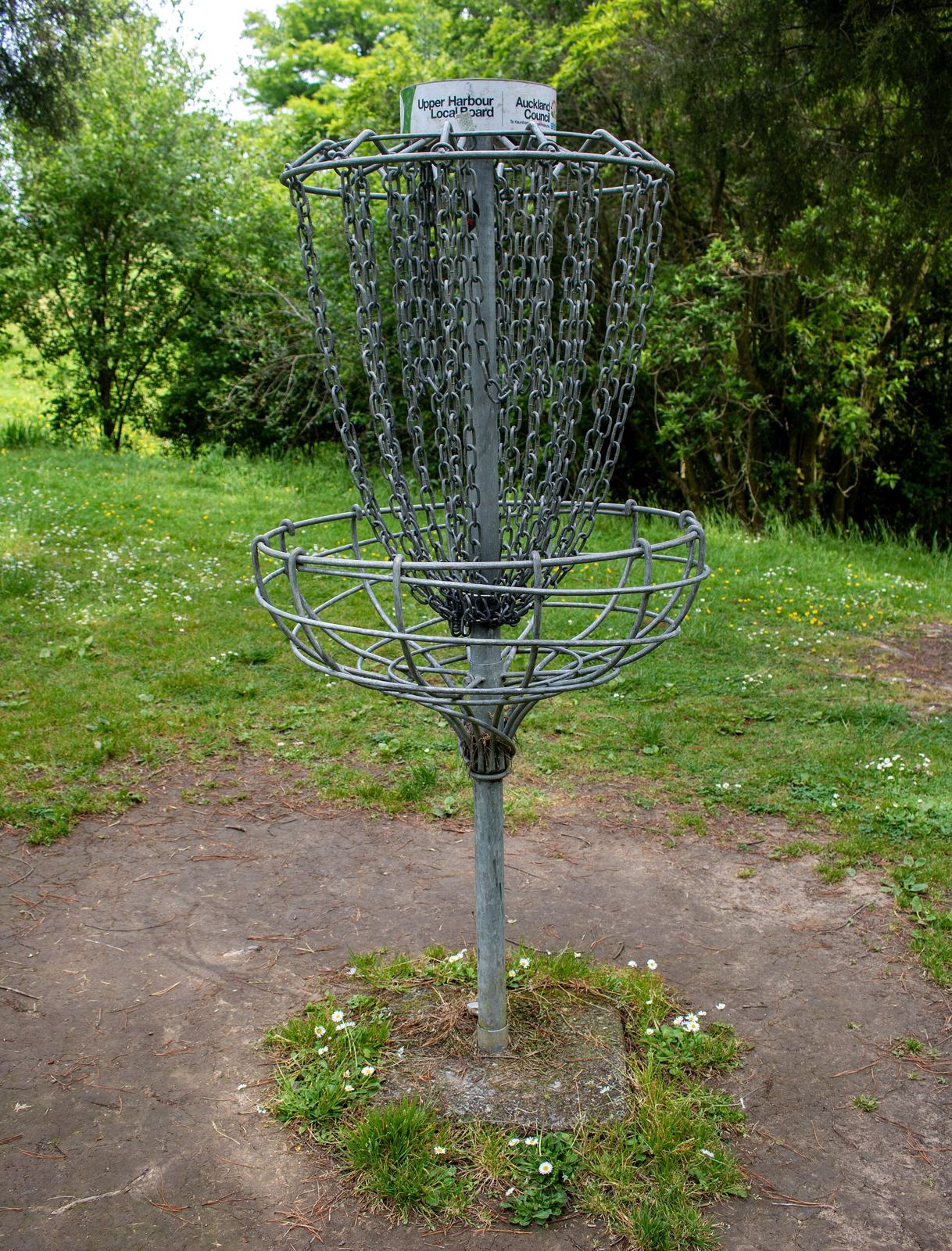
Branches, Bags, and Benches: Obstacles and Relief
Every disc golfer eventually finds their disc tucked behind a pine, under a picnic table, or beside a wasp nest that looks personally offended. What you’re allowed to do next lives in PDGA 803 Obstacles and Relief, a short section with a simple spirit: the course is the course, so play it as you find it, with a few sensible exceptions.
This guide covers the obstacles themselves: what you can move, what you must play around, and when the rules hand you a free move. For water and puddles specifically, see Casual Relief: Water, Puddles, and Free Moves.
Related: Stance and Foot Faults · How to Mark Your Lie · The Two-Meter Rule · The Abandoned Throw · Excessive Time.
Rule one: disturb the course as little as possible
803.01.A starts with a principle, not a penalty. You must choose the stance that results in the least movement of any obstacle that’s a permanent or integral part of the course. Trees, bushes, fences, signs, and benches all count.
Three practical consequences:
- No bending branches back to make room. Once you’ve taken your stance, you can’t move an obstacle to clear space for your throwing motion.
- Incidental contact is fine. It’s legal for your throwing motion to cause incidental movement of an obstacle. Brushing leaves on your follow-through isn’t a violation.
- You can lean on it, but don’t move it. The Q&A says holding a branch or other object behind your lie for support is allowed if it’s in-bounds and you don’t move it. Holding on to another person isn’t, because people aren’t part of the course (QA-STA-2).
And if a branch knocks the disc out of your hand during the backswing? QA-THR-1 says a disc dropped or knocked out before or during the backswing doesn’t count as a throw. Pick it up and go again (with the clock in mind).
What you’re allowed to move
803.01.B says you can’t move any obstacle on the course, then lists four exceptions:
- Casual obstacles on the playing surface farther from the target than the front edge of your lie.
- People and their stuff. You may ask other people to move themselves or their belongings. Yes, that includes the bag parked in your run-up.
- Course equipment. You may restore course equipment to proper working order, including removing obstacles from it.
- Litter. You may remove it from the course, and you should.
Move anything else and it’s one penalty throw (803.01.C).
What counts as a casual obstacle
Under 803.01.B.1, a casual obstacle must meet all three tests:
| Test | What it means |
|---|---|
| Loose and easy | Loose debris (small stones, small unconnected branches, pinecones, leaves, twigs) you can easily and quickly move by yourself, or other objects the Tournament Director designates |
| Not part of the design | Not intentionally placed as part of the course or event |
| Not stuck | Not embedded in the playing surface |
The PDGA Q&A tests the edges:
- Small branch partly in front of your disc: movable, as long as it’s on the playing surface behind the front of your lie and small enough to be loose debris, even if part of it reaches toward the hole (QA-OBS-3).
- A foot-thick, eight-foot broken branch: too big to be loose debris, so you can’t move it (QA-OBS-2). See solid obstacles below.
- A broken branch hanging off the ground just behind your marker: same status as a healthy branch. Play around it (QA-OBS-4).
- A spider web: only removable if some of it is on the playing surface behind the front of your lie. If it’s only in your flight path, it stays (QA-OBS-8).
- Snow and ice: not casual by default, but a TD can announce them as casual obstacles (QA-CAS-2).
Free relief: insects, animals, and solid obstacles
803.02 gives you a free move in two situations.
Harmful insects or animals (or anything the TD designates). You may mark a new lie on the line of play, farther from the target, at the nearest point that provides relief, unless the TD announces greater relief. QA-OBS-9 says that greater relief could be a drop zone, a re-throw, or the ability to move the lie.
An obstacle that physically blocks a legal stance behind your marker. You may mark a new lie on the line of play immediately behind that obstacle. That’s the answer for the giant branch in QA-OBS-2.
The picnic table, settled
QA-OBS-1 treats picnic tables, and any other park or course equipment, like any other obstacle:
- Disc under the table, room to get a stance (even by sticking a leg underneath): play it from there.
- Disc on top, room underneath: it’s a lie above the ground, so mark directly below it.
- Disc on top, no room underneath: the table is a solid obstacle, so mark directly behind it on the line of play.
Below the surface
Discs find culverts and rock crevices too. QA-POS-1 says the rules for a disc above the playing surface also apply below it: if no reasonable stance can be taken, mark directly above the disc on the playing surface without penalty, or at the first available spot back on the line of play if that point is in the air or inside a solid object. QA-STA-3 applies that to a grated drainage culvert: absent TD guidance, mark on the hillside directly above the disc, no penalty.
Don’t over-help yourself
Relief taken other than the rule allows is a misplay for playing from an incorrect lie under 811.F.1. “Nearest point” and “immediately behind” mean exactly that, not “a nicer spot a few steps over.”
What doesn’t get free relief
The Q&A is clear that thorny, itchy, or delicate greenery isn’t a free pass:
- Poison ivy, poison oak, nettles: no relief unless the TD declared it (QA-OBS-5).
- Sensitive or protected foliage with no special TD handling: no free relief (QA-OBS-6). A TD may make such areas OB or a required relief area.
In both cases the Q&A points to the same two exits, each costing one penalty throw: take optional relief under 803.03 (declare it to your group, then mark a new lie farther from the target on the line of play), or abandon the throw. We’ll give optional relief its own guide next.
Breaking things costs double
803.04 is short and stern: a player who intentionally damages any part of the course receives two penalty throws, and may also be disqualified under Section 3.03 of the Competition Manual. Snapping the branch that keeps catching your disc is exactly the move this rule exists for.
Quick reference
| Situation | Rule | Cost |
|---|---|---|
| Moving loose debris behind the front of your lie | 803.01.B.1 | Free |
| Asking someone to move their bag | 803.01.B.2 | Free |
| Moving a fixed or oversized obstacle | 803.01.C | 1 penalty |
| Wasp nest, harmful animal, TD-designated item | 803.02 | Free, nearest relief on line of play |
| Obstacle prevents a legal stance | 803.02 | Free, immediately behind it |
| Poison ivy, nettles, protected plants (no TD ruling) | 803.03 or 809.01 | 1 penalty |
| Intentionally damaging the course | 803.04 | 2 penalties, possible DQ |
Habits that keep the card quiet
These aren’t PDGA rules, just good manners and good sense:
- Look before you touch. Decide whether it’s loose, fixed, or too big before you reach for it.
- Announce relief out loud. “Taking relief behind the table” lets your group agree before the throw.
- Clear your lie, not your flight path. Debris counts only on the playing surface behind the front of your lie.
- Leave the trees standing. A bad lie is one stroke of trouble; damaging the course is two by rule.
- Unsure? Throw a provisional and ask an official later.
Where to read the rules yourself
- PDGA 803 Obstacles and Relief
- PDGA 803.01 Moving Obstacles
- PDGA 803.02 Relief from Obstacles
- PDGA 803.03 Optional Line of Play Relief
- PDGA 803.04 Damaging the Course
- PDGA 811 Misplay
- PDGA Rules Questions and Answers (QA-OBS-1 through QA-OBS-9, QA-STA-2, QA-STA-3, QA-THR-1, QA-POS-1, QA-CAS-2)
Rules checked on 2026-10-21 against the PDGA’s published text (pdga.com was down for maintenance that night, so we read the Internet Archive’s copies of the official pages: 803.01, 803.03, and 803.04 last updated Dec 31, 2025; Q&A Mar 18, 2026). The PDGA updates its rules most years, so check the current text before you settle a dispute on the card.